Amputation (Pulpotomy) Guide
You noticed a deep cavity in your child’s tooth and your dentist said that “root canal treatment” or “amputation” needs to be done. Your first reaction is probably this: “But it’s a baby tooth, it will fall out anyway. Can’t we just pull it out?”
This is one of the most common questions we encounter in Pedodontics (Pediatric Dentistry). Our answer is clear: Keeping the baby tooth in the mouth is using the most natural space maintainer. In this article prepared under the guidance of Prof. Dr. Behiye Bolgül, we will examine ways to save baby teeth and the differences between Primary Baby Tooth Treatments.
Related Articles
- What If a Primary Tooth Is Lost Early? 2025 Space Maintainer Guide
- Dental Abscess in Children: Symptoms and Treatment
- What is Sedation in Pediatric Dental Treatments?
- Sedation and General Anesthesia
- Dental Veneers in Children
1. Why Don’t We Just Pull It Out?
The only task of baby teeth is not eating. They are the “guides” for the permanent teeth that will come from below. If a baby tooth is extracted prematurely due to decay:
- Adjacent teeth shift towards the gap.
- The space for the permanent tooth coming from below narrows and crowding occurs (Need for Pediatric Orthodontic Treatment arises in the future).
- The child’s chewing function and speech are impaired.
Therefore, our priority is always to treat the tooth and keep it in the mouth until the age of shedding.
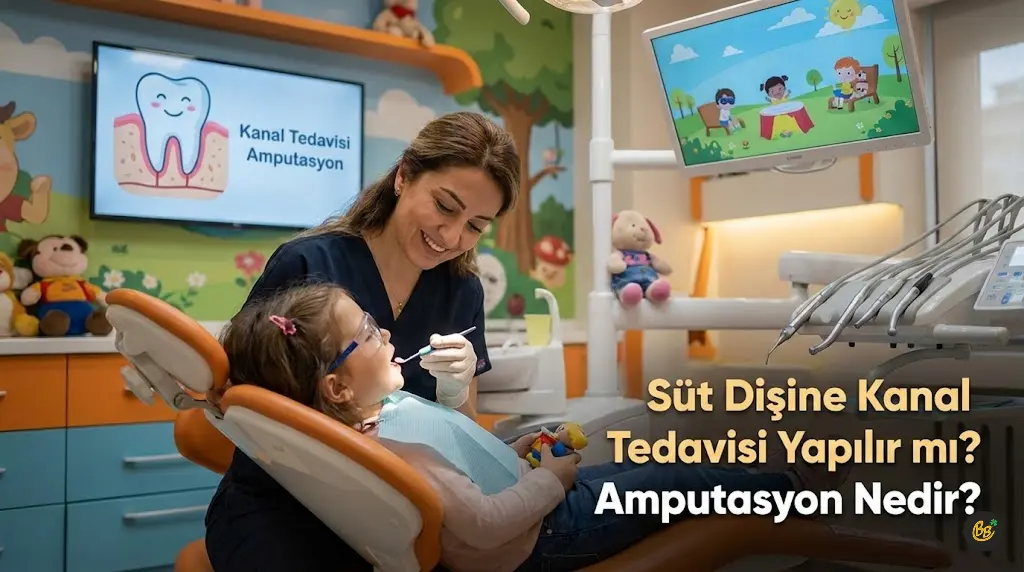
2. What is Amputation (Pulpotomy)?
Amputation, also known as “half root canal treatment” among the public, is applied when the decay approaches the nerves (pulp) of the tooth but does not descend to the roots.
- Procedure: Only the infected nerve tissue in the crown part (visible part) of the tooth is removed. The living tissue in the roots is preserved.
- Duration: It takes much shorter than a full root canal treatment.
- Result: The tooth continues to maintain its vitality and falls out at its normal time.
3. How is Baby Tooth Root Canal Treatment Performed?
If the decay has progressed too far and bacteria have descended to the roots of the tooth (usually if there is a beginning of Dental Abscess in Children), amputation is not enough. In this case, “Root Canal Treatment” is applied where the root canals are also cleaned.
Root canal fillings applied to baby teeth are made of “resorbable” materials, unlike permanent teeth. Thus, while the tooth coming from below melts the root of the baby tooth, the canal filling also melts with it and does not interfere with the process.
4. Does It Hurt During the Procedure?
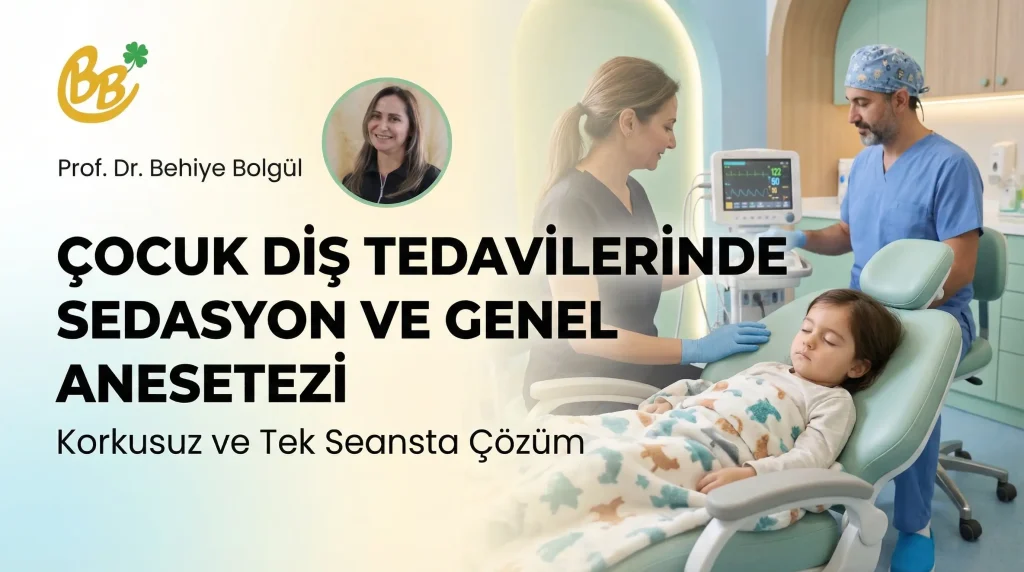
Parents’ biggest concern is pain. Thanks to advanced technologies like Digital Anesthesia in Pediatric Dental Treatments today, children can be numbed without feeling needle pain. If the child’s fear cannot be managed, the Sedation option can also be evaluated.
Take Precautions Before It’s Too Late
It is very important not to lose baby teeth prematurely in order to protect your child’s dental health and prevent possible orthodontic problems in the future. Create your appointment immediately to meet Prof. Dr. Behiye Bolgül and her expert team.