Decay Prevention Guide
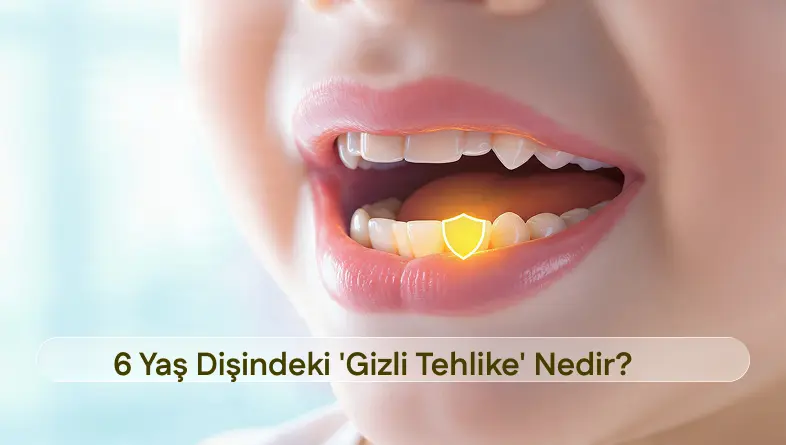
Is your child between 5-7 years old? Do they have pain or swelling in the back of their mouth? 90% of parents mistakenly think this is “a new baby tooth coming in.” But beware: The 6-year molars (permanent 1st molars), which are the cornerstone of the chewing center that your child will use for life, may be quietly taking their place!
In this comprehensive guide, with the expertise of Prof. Dr. Behiye Bolgül; you will find why these teeth are a “hidden danger”, the miraculous effects of Fissure Sealants (Dental Sealants), and the golden rules you need to apply at home.
Related Articles
- Bad Breath in Children: Causes and Solution Guide
- Fissure Sealants in Children (Detailed Explanation)
- Dental Abscess Symptoms and Emergency Treatment
- Is Fluoride Varnish Harmful? Scientific Facts
- Needle-Free and Painless Digital Anesthesia Method
- Early Extracted Baby Teeth and Space Maintainers
What Are 6-Year Molars and Why Are They Not Noticed?
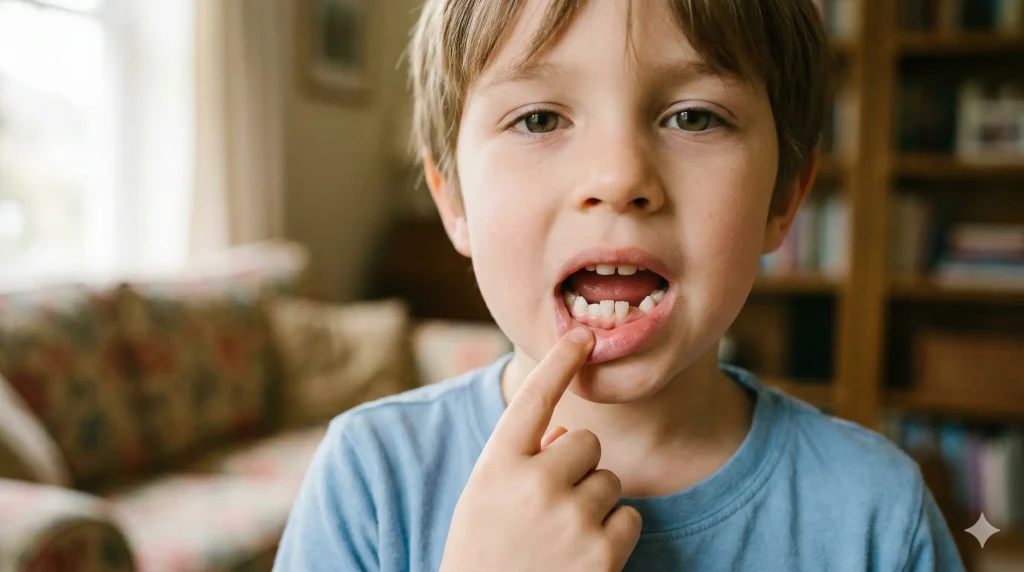
The teething process in children is a dynamic period. Teeth that appear around 5.5 – 7 years of age, behind the baby tooth row, without waiting for any baby tooth to loosen and fall out, are called “6-Year Molars” (Permanent 1st Molars).
Important Warning: These teeth do not come from under an existing baby tooth. They emerge from the back by breaking through the gums. That’s why parents mistakenly think “another baby tooth that will fall out has come in.” However, these teeth will remain in the mouth for life.
If you notice not only in the tooth area but also a general bad breath in your child during this period; this condition may be related to teething but can also be a sign of other infections. You can review our bad breath guide for details.
Why Are They Known as “Decay Magnets”?
A large portion of permanent tooth decay occurs within the first 1-2 years after the tooth erupts. So why do 6-year molars decay so quickly?
- Deep Fissures (Grooves): The chewing surfaces of these teeth are much more grooved and ridged than other teeth. Toothbrush bristles cannot reach the bottom of these narrow grooves.
- Insufficient Maturation: The enamel of newly erupted teeth is not fully hardened, making them vulnerable to acid attacks.
- Location Disadvantage: Since they are at the back of the mouth, they are in the area where children have the most difficulty reaching with a brush (or experience nausea).
Complete Protection Shield in Clinic and at Home
It is nearly impossible for a child whose fine motor skills are not fully developed to protect these valuable teeth alone. Here are the gold standard protection methods applied in Prof. Dr. Behiye Bolgül‘s clinic:
| Treatment / Method | What Does It Do? (Benefit) | Application Frequency |
|---|---|---|
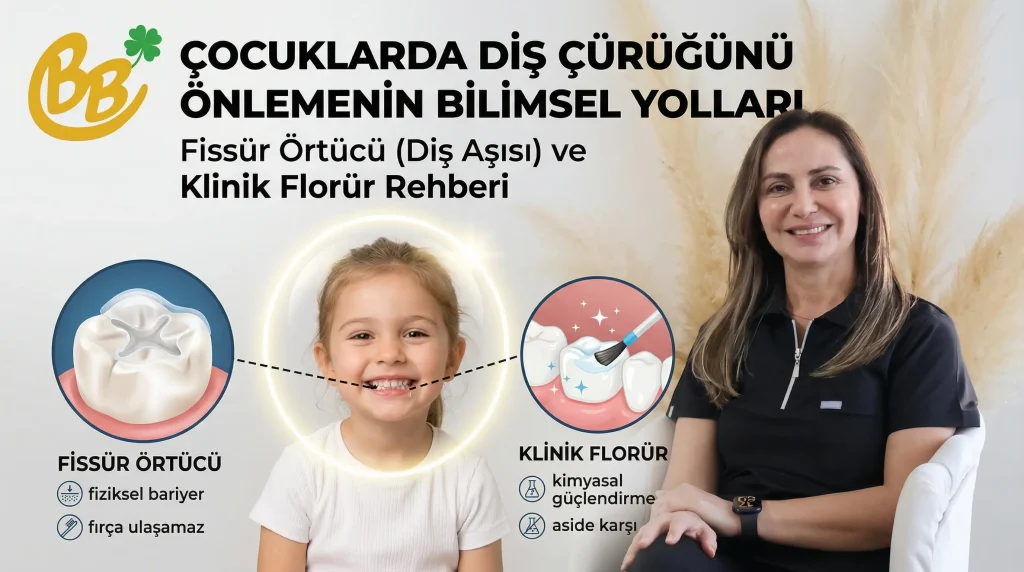
| Fissure Sealant (Sealant) | Seals the deep grooves on the tooth with a flowable, “filling-like” material. Bacteria have nowhere to hide. It is the most effective method. | Applied once, checked every 6 months. |
| Fluoride Varnish | Strengthens tooth enamel and provides resistance against acids produced by decay-causing bacteria. | Every 3-6 months depending on the child’s decay risk group. |
| Parent-Assisted Brushing | After the child brushes, the parent should brush again, especially the “backmost teeth.” | Every night before bed (until age 10). |
Expert Note: Fissure Sealant application is completely painless, no drilling is done on the tooth (no needle is used), and it only takes minutes.
3 Critical Mistakes Parents Often Make
The following mistakes can cause your child to need implant or bridge treatment in the future:
| Mistake | Risk / Explanation |
|---|---|
| Saying “It’s a Baby Tooth Anyway, Extract It” | If a 6-year molar is extracted, no new one will replace it! Other teeth will shift (tilt) into the extraction space and serious orthodontic problems will occur. Space maintainers may be needed for early extracted baby teeth. |
| Waiting for Pain | When a child says “my tooth hurts,” decay has already reached the nerve. At this stage, dental abscess or root canal treatment may be required instead of a filling. Early diagnosis is painless. |
| Dental Fear | Don’t delay treatment by saying “my child won’t sit in the chair.” Digital anesthesia and sedation methods make trauma-free treatment possible. |
Frequently Asked Questions
Do 6-year molars get replaced?
No, 6-year molars (1st molars) are permanent teeth. They do not replace baby teeth and do not fall out to be replaced. They must remain in the mouth for life.
My child has swelling in the back gums, what should I do?
This condition may be due to an “eruption cyst” or pressure from the tooth coming in. However, it could also be a dental abscess due to decay. A pediatric dentist examination is essential.
When should fissure sealant be applied?
It should be done immediately when 6-year molars are fully visible in the mouth (around 6-7 years of age). Doing it before decay starts provides the most effective result.
Can fillings be done on decayed 6-year molars?
Yes, if decay has occurred, it can be cleaned and filled. If decay has progressed deeply, amputation or root canal treatment may be required.
Early Diagnosis, Lifelong Health
6-year molars are the “keystone” of oral health. When your child approaches 6 years of age, you must take them to a Pediatric Dentist (Pedodontist) examination, even if they have no complaints. Remember; preventive treatments (fissure sealants) are much more economical and easier than fillings and root canal treatments that will be needed in the future.
Have you had your child’s 6-year molars checked? Take your preventive measures before it’s too late!