What Are Tongue and Lip Ties in Children?
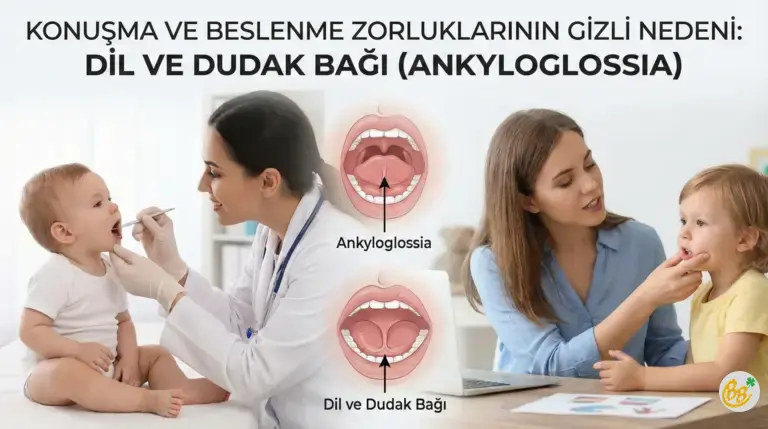
We know how important every detail concerning your child’s health is. Tongue-tie (ankyloglossia) and lip-tie, which have been frequently heard of recently, are actually congenital and quite common conditions. A tongue-tie occurs when the piece of tissue called the “frenulum,” which connects the bottom of the tongue to the floor of the mouth, is shorter, thicker, or tighter than normal. Similarly, a lip-tie occurs when the frenulum connecting the upper lip to the upper gum has an abnormal structure. This condition restricts the mobility of the tongue and lip. This restriction can affect many of the child’s basic functions, from feeding to speech. Thanks to modern medical approaches, the treatment for tongue and lip ties is quite simple and effective. In this article, we will discuss in detail what tongue and lip ties are, how they can affect your child’s development, and the modern, painless treatment methods applied by Prof. Dr. Behiye Bolgül in Antalya.

Significant Advantages of Tongue and Lip Tie Treatment
Treating a tongue and lip tie yields many positive results that create a domino effect on your child’s developmental process. With early diagnosis and appropriate treatment, children’s oral functions can develop healthily.
- Effective Breastfeeding and Healthy Nutrition: Especially for babies, tongue and lip ties can cause them to be unable to latch onto the breast correctly. This can lead to the baby not getting enough nutrition, causing nipple sores for the mother, and making the breastfeeding process difficult. Treatment enables the baby to latch and feed correctly and efficiently, eliminating these problems.
- Clear Speech and Sound Development: The mobility of our tongue is critical for correctly producing sounds like “t, d, z, s, l, r.” A tongue-tie restricts these movements, paving the way for speech disorders (lisping) at later ages. Early treatment supports the child’s speech development.
- Ideal Oral and Dental Health: An upper lip tie can cause a gap (diastema) to form, especially between the two front teeth. Additionally, the tongue’s inability to perform its function of cleaning the teeth increases the risk of tooth decay. Treatment helps prevent potential future orthodontic and dental problems.
- Easing the Transition to Solid Foods: When children transition to solid foods, they need to move the food around in their mouth with their tongue and swallow it. A tongue-tie can make this function difficult. Treatment makes your child’s eating experience more comfortable.
- Increased Overall Quality of Life: This simple intervention, which positively affects many basic skills from nutrition to communication, increases the child’s overall quality of life and self-confidence.
Who is a Suitable Candidate for Tongue and Lip Tie Treatment?
The effects of a tongue and lip tie can vary depending on the child’s age. The signs that parents should pay attention to become more apparent, especially during the feeding and speech development periods. The following situations indicate that tongue and lip tie treatment may be the ideal solution:
- Difficulty sucking and swallowing in infants, frequently releasing the breast, and making a “clicking” sound while nursing.
- Persistent nipple pain and sores for the mother during breastfeeding.
- The baby’s failure to gain adequate weight.
- Frequent hunger, gas pains, and fussiness due to insufficient feeding.
- Difficulty in producing certain sounds in children. Particularly, difficulty in producing sounds that require the tongue to touch the palate, such as “L”, “R”, “D”, “T”, “S”, and lisping.
- A persistent gap (diastema) between the front teeth.
- Difficulty with simple movements like licking an ice cream cone or moving the tongue around inside the mouth.
- Holding food in the mouth for a long time before swallowing.
- An increased risk of cavities because the tongue cannot fully perform its function of cleaning the teeth.
Tongue and Lip Tie Treatment Methods
Today, thanks to technological advancements, tongue and lip tie treatment can be performed very comfortably and quickly. Prof. Dr. Behiye Bolgül, a pediatric dentist in Antalya, manages the process by determining the most suitable treatment method for your child based on their age, the structure of the tie, and your complaints.
1. Frenotomy (Laser or Surgical Incision)
This is the most common and simplest treatment method. Under local anesthesia, the frenulum tissue causing the movement restriction is cut and released within a few minutes.
- Laser Frenotomy: In this modern method, the tie is cut using a laser beam. There is almost no bleeding, it does not require stitches, and the healing process is much faster and more comfortable. It is the most preferred method, especially for babies and children.
2. Frenuloplasty (A More Comprehensive Surgical Method)
This is a surgical technique preferred in more severe cases where the frenulum tissue is very thick and complex. With this procedure, the connective tissue is reshaped to provide full freedom of movement for the tongue or lip.
3. Post-Treatment Support: Speech Therapy and Exercises
After treatment, simple tongue and lip exercises are recommended, especially for children whose speech skills have been affected, to learn how to use the muscles correctly. Working with a speech therapist when necessary accelerates the correct pronunciation of sounds.
Tongue and Lip Tie Treatment Costs 2025: How Will It Affect Your Budget?
Giving a precise figure for the cost of tongue and lip tie treatment can be misleading. This is because the prices are not fixed and vary depending on several important factors. The main factors affecting the treatment cost are:
- The technology used (laser treatments may differ in cost from traditional methods).
- The experience of the doctor and the location of the clinic.
- The scope of the procedure (treatment for only a tongue-tie, only a lip-tie, or both).
Therefore, the best way to get the most accurate price information for your child’s situation and to learn about the treatment process in detail is to make an appointment with a specialist. To take a step in this regard, you can take advantage of the free consultation appointment offered by our clinic.
Frequently Asked Questions About Tongue and Lip Tie Treatments
Will my child feel pain during the treatment?
No. The procedure is completely painless thanks to the topical or local anesthetics applied beforehand. Babies may feel slight discomfort during the procedure, but this is more like a feeling of being held than pain.
Is the tongue and lip tie treatment permanent?
Yes, when done correctly and when the exercises recommended by the doctor are followed, tongue and lip tie treatment is a permanent solution. The risk of the tissue reattaching is extremely low when the recommended care instructions are followed.
What is the most appropriate age or time for treatment?
If the tongue or lip tie directly affects breastfeeding and nutrition in the newborn period, the most appropriate time for treatment is within the first few weeks after birth. The earlier the intervention, the sooner the feeding problems are resolved. In cases affecting speech, the intervention can generally be planned for the period when speech begins, between the ages of 1-3.
Is post-treatment care difficult?
No, the care is quite simple. It is usually sufficient to perform the simple stretching exercises that the doctor will show you, which take a few seconds a few times a day. These exercises ensure that healing is completed correctly and do not require special care.
When will speech or feeding improve after the procedure?
The positive effects on feeding are often seen immediately after the procedure. Babies can latch onto the breast better and begin to nurse more efficiently. It may take a little more time to see the effects on speech. As the tongue adapts to its new range of motion and the correct muscle memory is formed, a noticeable improvement in the pronunciation of sounds is observed within a few weeks or months, especially when supported by speech therapy or exercises.
Conclusion: The Smile of Your Dreams is One Step Away!
Your child’s tongue and lip tie is a condition that can be treated very simply and effectively when diagnosed early. A small intervention directly affects their nutrition, speech development, and future oral health, making a big difference in their quality of life. Taking a step with the right information and expert support, instead of postponing, is one of the most valuable gifts you can give your child.
To get more information about tongue and lip tie treatment for children in Antalya, to have your child’s condition evaluated, and to create the most suitable treatment plan, you can contact Prof. Dr. Behiye Bolgül. Take the first step today for a healthy smile and development.