Child Orthodontics and Habits Guide
For babies, sucking is not just a means of feeding, but also the most powerful method of soothing. However, when this innocent reflex continues beyond a certain age, it can cause permanent damage to the tooth and jaw structure. So, where is the limit? When should these habits be stopped without risking “buck teeth” or jaw narrowing? In this guide, you will find the differences between pacifier and thumb sucking, their effects on jaw structure, and Prof. Dr. Behiye Bolgül‘s special recommendations for parents.

Related Articles
- Pediatric Dentistry Specialist Antalya
- Teething in Children From A to Z
- What If a Primary Tooth Is Lost Early?
- My Child Has Bad Breath
1. When Does an Innocent Reflex Turn into a “Danger”?
It is completely natural for a newborn baby to suck their thumb; it provides a sense of security. However, the 2-4 year age range is a critical threshold. Sucking habits that continue as the primary teeth are completed cause the upper jaw to extend forward and the palate structure to deepen. If this habit continues after the age of 4, the foundation for orthodontic problems is laid.
2. Pacifier or Thumb? Which is More Harmful?
This is one of the questions parents ask most. From a dental perspective, the answer might be surprising: Thumb sucking is riskier.
Why? Because you can “throw away” the pacifier or cut its tip to reduce the child’s interest. However, the thumb is always with the child. Additionally, the thumb applies a stronger force to the palate compared to a pacifier, pushing the upper teeth forward more aggressively.
3. What is “Open Bite”?
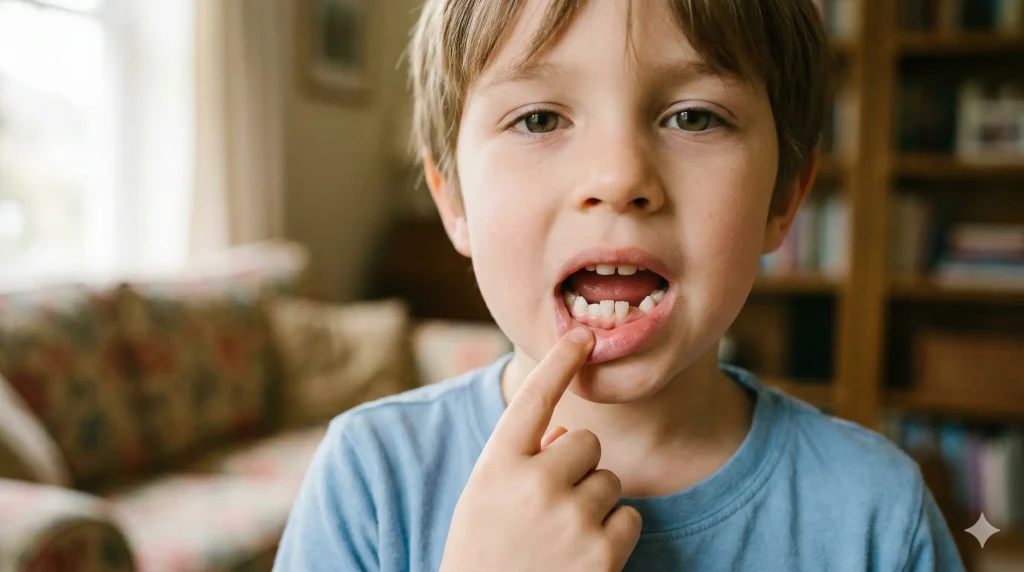
In children who suck pacifiers or thumbs for a long time, the front teeth begin not to touch each other. Even when the child clenches their teeth, a large gap remains between the front teeth; this is called an “Open Bite.” This condition is not just an aesthetic problem; it also leads to speech disorders (lisping) and swallowing difficulties. Also, since the mouth does not close, mouth breathing begins, which triggers issues like bad breath and frequent illnesses.
4. Methods to Stop: Is Prohibition the Solution?
Punishment or getting angry usually backfires and causes the child to cling tighter to this habit, which they see as a safe haven. Instead, “Positive Reinforcement” should be applied.
- Reward Chart: Sticking a star for every day they don’t suck.
- Reminders: Instead of getting angry when they suck their thumb, distract them with a game that uses their hands.
- Professional Support: If home methods don’t work, simple orthodontic appliances called “habit breakers,” applied by your dentist, can be used.
Comparison Table: Pacifier vs. Thumb
The effects of both habits on dental health and the cessation process:
| Feature | Pacifier Sucking | Thumb Sucking |
|---|---|---|
| Effect on Jaw Structure | Risk can be reduced with orthodontic pacifiers. | Deepens the palate, pushes teeth forward (Higher Risk). |
| Ease of Stopping | Easier (Pacifier can be thrown away). | Harder (Always accessible). |
| Infection Risk | Can pick up germs if dropped. | Risky if hand hygiene is poor. |
| Dentist Recommendation | Controlled use allowed up to age 2. | Should be stopped as soon as possible. |
Frequently Asked Questions
Does a pacifier make teeth crooked?
Yes, intense pacifier use that continues especially after 2-3 years of age can cause narrowing of the upper jaw and crooked teeth emergence. Although “orthodontic” pacifiers reduce the risk, they do not eliminate it completely.
Is applying bitter nail polish a correct method?
While this method works for some children, it can create traumatic effects in others, or the child may get used to the taste. Before trying this method, an expert should definitely be consulted, and the child’s psychology should be considered.
My child’s jaw is distorted, will it correct itself?
If the habit is stopped in the early period (primary teeth period), slight distortions may correct themselves. However, if permanent teeth have started to erupt or if there is skeletal distortion, pediatric orthodontic intervention is required.
Take Action Before It’s Too Late!
Are you worried about your child’s thumb sucking or pacifier habit? Noticing jaw structure deterioration early can prevent long and costly wire treatments in the future. Create your appointment now to protect your child’s smile under the guidance of Prof. Dr. Behiye Bolgül.