The dentist’s chair can be a frightening experience for many children and parents. Questions like “Will they feel pain?”, “Will my child stay still?”, and “What if the treatment takes a long time?” come to mind. These anxieties are a major source of stress, especially for those who need dental treatment at a young age. However, in the world of modern pedodontics, sedation and general anesthesia make this process both comfortable and safe.
Thanks to treatments performed with sedation and general anesthesia methods, under the experience of pediatric dentist Prof. Dr. Behiye Bolgül in Antalya, both your child will be relaxed and the procedure will be completed successfully. In this article, you will find every detail, starting from the differences between sedation and general anesthesia, explaining the process step by step, and covering the application criteria.
What are Sedation and General Anesthesia?
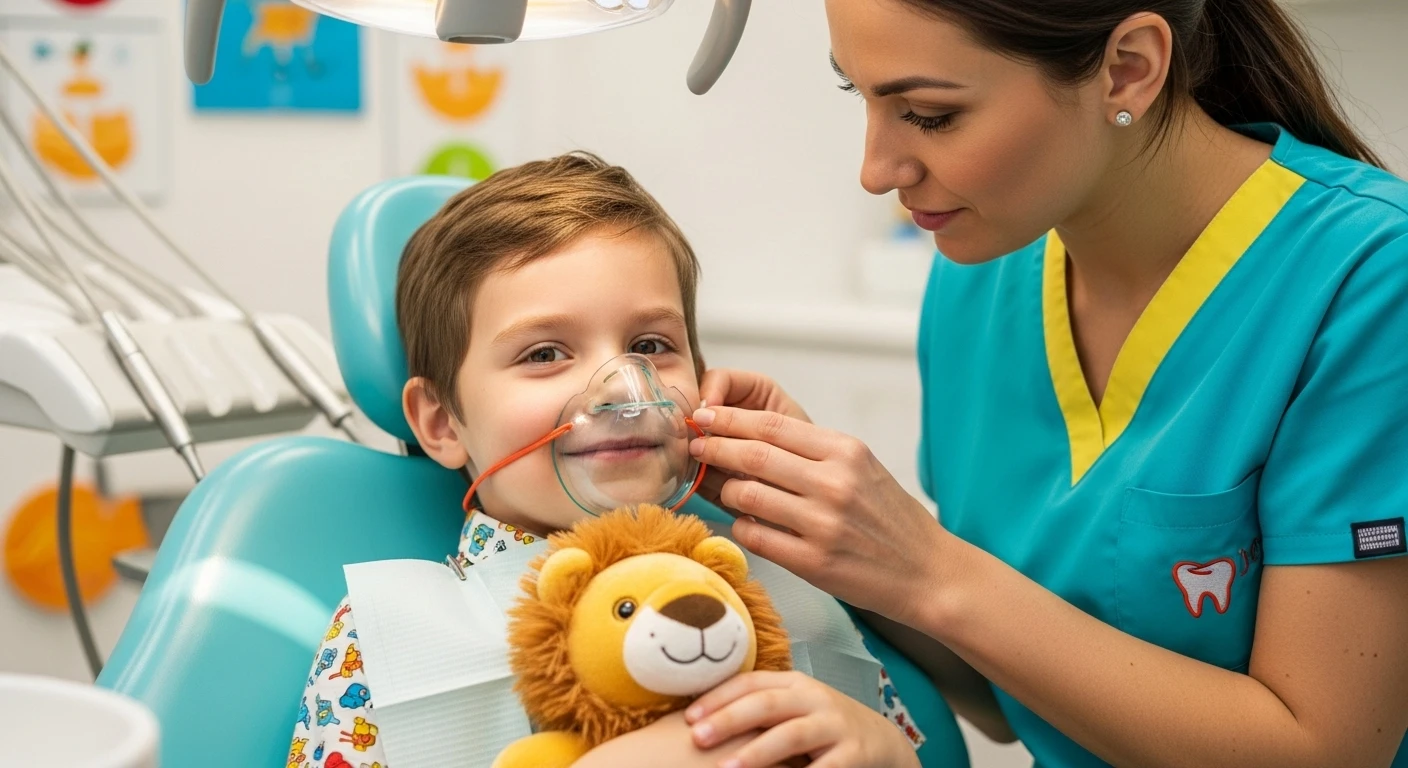
• Sedation (Conscious Sleep / Light Sedation):
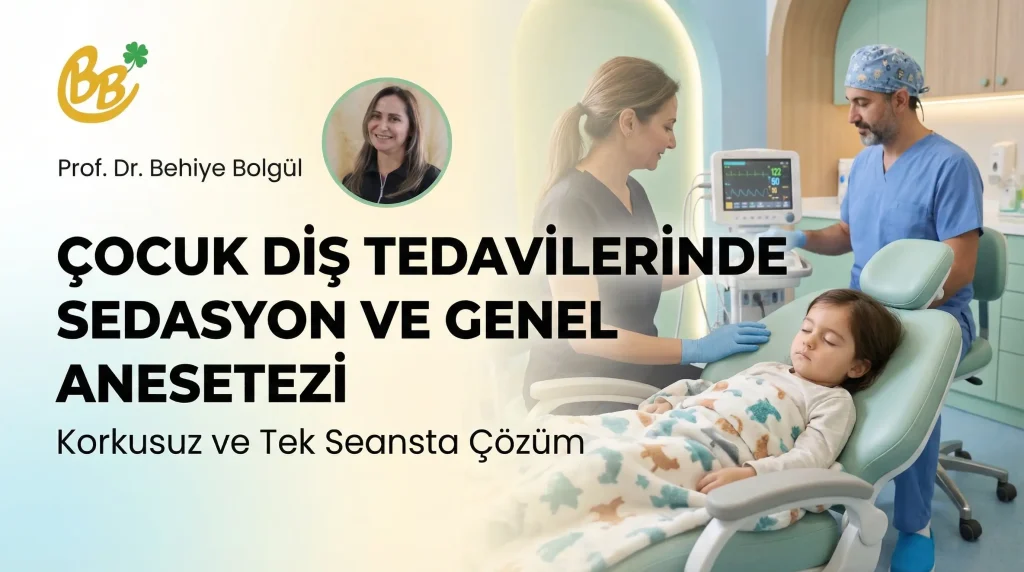
Sedation is a sleep-like state where the child becomes significantly calm without completely losing consciousness. They can respond to commands, and their breathing continues on its own.
• General Anesthesia (Deep Sleep / Narcosis):
General anesthesia is a state of deep sleep where the patient is completely asleep and does not feel any pain or discomfort. In this case, respiratory support may be needed, and the procedure is performed in an operating room-like environment.
• To Briefly Summarize the Differences:
| Feature | Sedation | General Anesthesia |
|---|---|---|
| State of Consciousness | Partially awake | Completely unconscious |
| Respiratory Status | Continues on its own | May require support |
| Waking Process | Relatively faster | Longer observation period |
| Application Environment | More possible in a clinical setting | May require a surgical / operating room setup |
In Which Situations Are Sedation and General Anesthesia Preferred?
At the clinic of Prof. Dr. Behiye Bolgül in Antalya, sedation or general anesthesia is preferred in the following situations:
• Children with high fear or anxiety of the dentist
• Children who cannot cooperate at a young age
• Severe tooth decay cases and comprehensive dental treatments
• Treatments that will take a long time and require multiple procedures
• Children who cannot stay still due to mental or physical disabilities
These criteria are also consistent with clinical experience and scientific literature.
The Treatment Process: Step by Step
- Examination and Planning
The child’s health history, medications, and allergies are evaluated. The anesthesiologist and pediatric dentist make a joint decision. - Pre-Procedure Preparation / Fasting Period
The child should not eat at certain times on the morning of the procedure (e.g., 6–8 hours of fasting). - Anesthesia Application
In sedation, medications are usually given intravenously (IV), orally, or nasally. In general anesthesia, sleep is induced with gas or intravenously. - Dental Treatments
Procedures such as fillings, root canals, and extractions are performed while the child is comfortable and still. - Waking and Observation
After the procedure is completed, the patient is slowly awakened, and vital signs are checked. - Discharge and Home Care
If appropriate, the patient returns home on the same day. The dentist will inform you about the recommended oral care, nutrition, and follow-up appointments.
Advantages of Sedation and General Anesthesia
• Prevents Stress and Anxiety: The child does not remember anything during the procedure, reducing the possibility of trauma.
• Safe and Error-Free Procedure: Accidents that could be caused by a moving child are prevented.
• Multiple Procedures in a Single Session: Procedures such as fillings, extractions, and root canals can be done together.
• Fast Recovery Process (in Sedation): The effects wear off more quickly.
• Less Burden on the Entire Body System (in Sedation): A more controlled and limited application is performed.
• Ideal for Children Who Do Not Require Effective Cooperation: A suitable solution for mentally disabled children and children at a very young age.
Frequently Asked Questions About Dental Treatments with Sedation and General Anesthesia in Children
Does the procedure hurt?
No. Local anesthesia is also used with sedation and general anesthesia; there is no sensation of pain.
What is the main difference between sedation and general anesthesia?
In sedation, the child’s consciousness is partially open, and they can be given commands; in general anesthesia, consciousness is completely lost, and respiratory support may be required.
What are the risks?
When performed under appropriate conditions and with an expert team, the risk is very small. Complications are prevented with monitoring and preparation.
How should post-anesthesia care be?
The child should rest, drink fluids, and have a light diet; the dentist’s recommended oral care and follow-up appointments should be followed.
Can it be applied to every child?
No. The decision is made by considering the child’s age, general health status, level of cooperation, and the scope of the procedures to be performed.
What should eating and drinking be like after the procedure?
It should start with fluid intake for the first few hours. Soft, lukewarm, and easy-to-chew foods (soup, yogurt, puree) should be preferred. Hard, hot, or shelled foods should be avoided. It is important to follow the nutrition program recommended by the dentist.
How long does the procedure take?
Simple procedures can take between 30–60 minutes. Comprehensive treatments (root procedures, multiple teeth) can take several hours. The clinical staff will inform you of the approximate duration in advance according to the treatment plan.
How much do sedation and general anesthesia cost?
The price depends on the duration of the procedure, the medications, the clinic’s infrastructure, and the dentist’s experience. A preliminary examination is recommended for a clear price.
Why is Your Clinic (Behiye Hoca’s Practice) Different?
• Expertise and Trust: Prof. Dr. Behiye Bolgül serves in the field of pediatric dentistry (pedodontics) in Antalya.
• Sedation & General Anesthesia Application: This service is among the active treatments on Behiye Hoca’s website: there is a “Sedation and General Anesthesia” section.
• Clinical Experience: Behiye Hoca’s background and academic career build trust.
• Location and Contact: Located in the Konyaaltı area of Antalya; in Arapsuyu Mahallesi, on Atatürk Boulevard.
• Patient References: The comments of patients who have undergone procedures under general anesthesia show the success of the treatment and satisfaction. (Doktorsitesi)
Highlighting these differences in a blog post will both allow you to use keywords like “Antalya pediatric dentist sedation general anesthesia” strongly in terms of SEO and create a sense of trust in the reader.
Conclusion: Comfortable Smiles Await in Antalya!
Dental treatments with sedation and general anesthesia in children offer great advantages to both the child and the parent by eliminating fear and cooperation problems. For parents in Antalya, this service becomes a comfortable, safe, and effective solution with the experience of specialist pedodontist Prof. Dr. Behiye Bolgül.
If you also want to plan your child’s dental treatment with an approach that minimizes stress, contact us immediately. Get a free preliminary examination appointment, let us answer your questions with an expert opinion, and let’s build that little smile with confidence!