As a parent, looking into your child’s mouth and seeing a new tooth appearing right behind the existing baby tooth can cause panic. Especially if the permanent tooth is coming from below and the baby tooth is not loose, questions like “Will my child’s teeth be crooked?” or “Is urgent intervention required?” immediately come to mind.
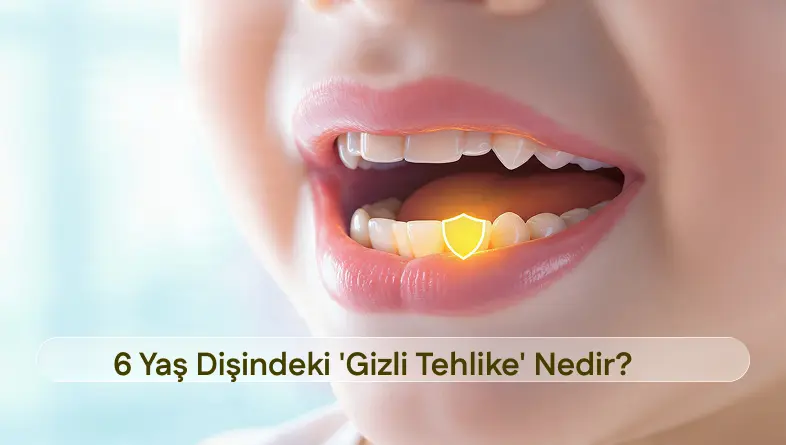
First of all, take a deep breath and calm down. This condition, popularly known as “shark teeth”, is a very common and easily resolved natural developmental process that we encounter frequently in pediatric dentistry (pedodontics).
So, why do double rows of teeth form in your child’s mouth and what should you as parents do in this situation? Let’s examine this process in a scientific yet understandable language.
What Are Shark Teeth and Why Do They Occur?

In a normal tooth transition process, the incoming permanent tooth slowly dissolves the root of the upper baby tooth. The baby tooth with the dissolving root starts to become loose and eventually falls out, making way for the permanent tooth.
However, in some cases, the incoming permanent tooth starts to erupt not exactly from under the baby tooth, but slightly further back (towards the tongue). Because the permanent tooth deviates from its route, it cannot dissolve the root of the baby tooth. Consequently, the baby tooth stays in place while a new permanent tooth appears right behind it.
The main causes of this situation are:
- Narrow Jaw: Not having enough space in the child’s jaw for the newly coming permanent teeth.
- Deviation in Eruption Direction: The permanent tooth not coming at the correct angle due to genetic or structural reasons.
- Late-Falling Baby Teeth: The root structure of the baby tooth being more resistant than normal.
This picture is usually seen in the lower front incisors (ages 5-7) and upper back molars (ages 10-12).
⚠️ Important Warning for Parents: Common Misconceptions
Many parents who see a double row of teeth panic, thinking, “My child’s jaw will definitely be crooked, braces must be fitted immediately.” However, in most cases, when the front baby tooth falls out (or is extracted by a dentist), the natural pushing force of the tongue will spontaneously move the back permanent tooth forward into the correct alignment within months. There is no need for early panic, professional follow-up is sufficient.
What Should You Do at Home in Case of “Your Child’s Permanent Tooth Coming Out Before the Baby Tooth Falls Out”?
If you have noticed a double row of teeth in your child’s mouth, there are a few simple steps you can take at home:
- Stay Calm and Do Not Frighten Your Child: Children mirror their parents’ reactions. Tell them that this is a normal part of the growing process.
- Check for Looseness: Gently check how loose the front baby tooth is with a clean finger.
- Have Them Do Tongue Exercises: Ask your child to gently push the new tooth from behind or the loose baby tooth in front forward with their tongue. Children’s tongue muscles are very strong, and this simple movement can speed up the tooth’s falling out.
- Encourage the Consumption of Hard Foods: Biting into hard fruits and vegetables like apples and carrots helps the loose tooth fall out naturally.
- Never Pull Forcefully: If the tooth is not loose enough yet, pulling it with a string or forcing it at home can damage the child’s gums and create trauma.
When Should You Consult a Pediatric Dentist (Pedodontist)?
Most of the time, cases of a permanent tooth erupting from behind without the baby tooth falling out are resolved within a few weeks with the front baby tooth falling out on its own. The back permanent tooth then moves forward to its proper place over time with the pressure of the tongue.
However, if any of the following situations apply, a professional pedodontic examination is a must:
- The incoming permanent tooth is fully erupted (has reached its own height), but the front baby tooth is not loose at all.
- Your child experiences severe pain, sensitivity, or difficulty eating in this area.
- There are signs of redness, swelling, or infection in the gums.
- You have general concerns about a narrow jaw regarding the alignment of the permanent teeth.
In such cases, a pediatric dentist (pedodontist) will perform a short and painless extraction of the stubborn baby tooth, creating the necessary space for the permanent tooth to settle into its proper place. This simple early intervention also prevents the need for more complex orthodontic (braces) treatment in the future.
Frequently Asked Questions (FAQ)
Will the back permanent tooth come forward on its own?
Yes, in the vast majority of cases, it does. After the stubborn front baby tooth falls out (or is extracted by a dentist), the child’s tongue movements and natural muscle pressure during speech will slowly push the back permanent tooth forward into the empty space where it belongs.
Are shark teeth genetic?
Largely yes. Narrow jaw, larger tooth sizes, or differences in the eruption angle of teeth are usually inherited. If a mother or father experienced a similar double row of teeth condition during childhood, there is a very high probability that it will be seen in their child as well.
Does pulling a loose tooth with a string damage the root?
Absolutely yes. Traditional forceful methods like “tying it with a string to the door” can cause serious tearing in the gum tissue, unnecessary pain, and a child’s fear of the dentist (psychological trauma). Furthermore, if the root has not fully dissolved, it creates a risk of leaving a piece inside or causing an infection. If the tooth doesn’t fall out naturally, a specialist must be consulted.
We Stand By You for Healthy Smiles
Children’s dental development requires careful and expert follow-up. For any abnormalities or concerns you encounter regarding your child’s tooth transition process, we are here to manage it in the healthiest way.
If you would like a professional evaluation of your child’s dental health, you can schedule an appointment at our clinic in Antalya, ensuring that the process is in expert hands.
Wishing you healthy and happy smiles!