Author: Prof. Dr. Behiye Bolgül
Traditional metal braces were seen as the only option for correcting dental crowding for many years. However, aesthetic concerns, eating and drinking restrictions, and brushing difficulties caused by metal braces could make the treatment process challenging, especially for school-aged children and teens.
In modern pediatric dentistry practices of 2026, we are now in a brand new era: Clear Aligner Treatments for Children. With this method, designed specifically for the jaw development of children and young patients, it is possible to create healthy smiles without aesthetic concerns. As Prof. Dr. Behiye Bolgül, we have analyzed this revolution in Pediatric Orthodontics, which parents research most frequently.
Related Articles
- Pediatric Orthodontics
- Fissure Sealants in Children
- What is Early Childhood Caries (Bottle Decay)?
- What if a primary tooth is lost early? 2025 Space Maintainer Guide
1. Is Clear Aligner Treatment Suitable for Children?
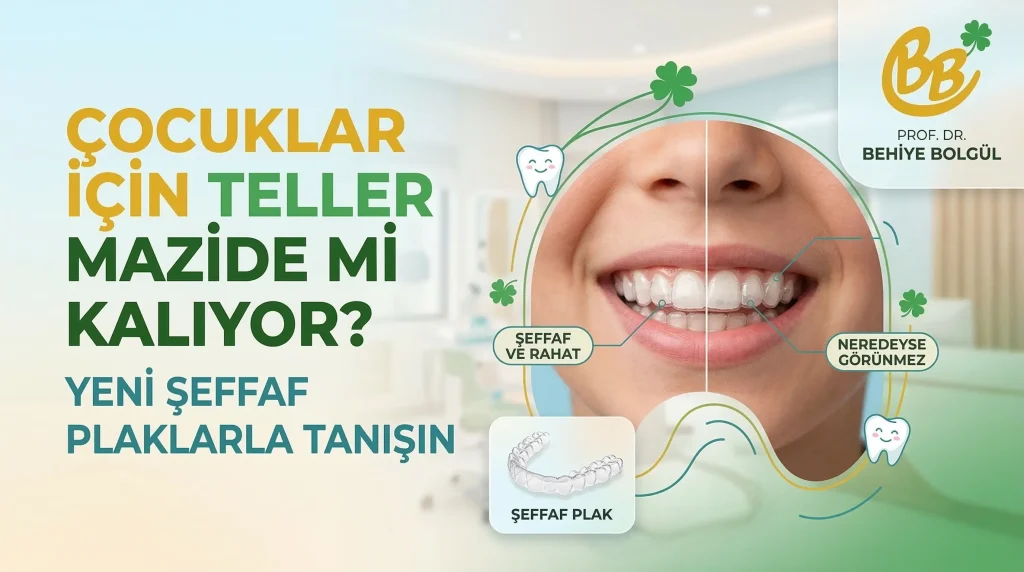
In the past, clear aligners were thought to be only for adults. However, today, there are series specifically developed for children in the mixed dentition period (between ages 7-11, where both primary and permanent teeth are present together). These aligners adapt to the child’s growing jaw structure and provide guidance by making room for the permanent teeth to come from underneath.
2. Advantages of Clear Aligners Over Metal Braces
Why are more and more parents and children choosing clear aligners?
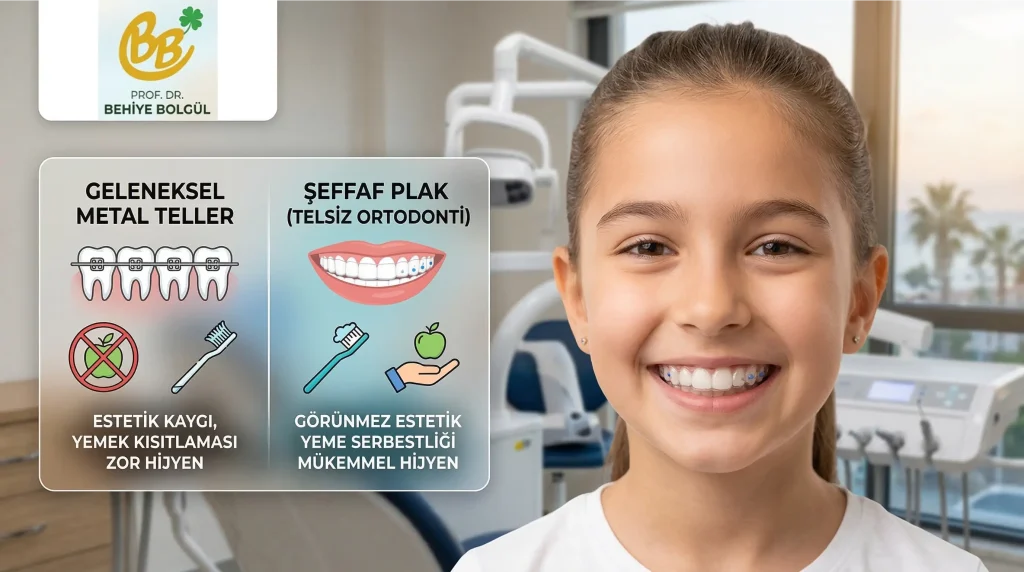
- Invisible Aesthetics: Aligners are almost invisible from the outside, preventing a drop in the child’s self-confidence at school or in social life.
- Eating Freedom: Since aligners are removed while eating, there are no bans like \”You can’t bite an apple\” or \”You can’t eat nuts.\”
- Excellent Hygiene: The worry of food debris getting stuck between wires is over. The aligner is removed, the teeth are brushed normally, and the aligner is put back in. This reduces the risk of cavities during orthodontic treatment to zero.
- Painless and Comfortable: Since there are no poking wires or broken brackets, it doesn’t require emergency dental visits.
3. How Does the Treatment Process Work? Does Taking Impressions Cause Nausea?
Traditional putty impression methods can cause nausea in children. In our clinic, we overcome this process with zero discomfort using digital impression methods and digital applications. With intraoral scanners, a 3D map of the teeth is created, and the aligners are produced to the millimeter according to this digital format.
Comparison Table: Metal Braces vs. Clear Aligners (For Kids)
| Feature | Traditional Metal Braces | Clear Aligners for Kids |
|---|---|---|
| Appearance | Noticeable, metal-colored. | Transparent, not noticeable from the outside. |
| Eating & Drinking | Hard and sticky foods are prohibited. | Aligner is removed, so everything can be eaten. |
| Brushing | Requires special interdental brushes, difficult. | Aligner is removed, normal brushing is done. |
| Emergencies | Wire poking or bracket breakage can occur. | Emergency risk is minimum. |
| Wearing Time | 24/7 in the mouth, cannot be removed. | Must be worn for an average of 20-22 hours a day. |
Frequently Asked Questions
What happens if my child forgets to wear the aligner?
Cooperation (compliance) is crucial in clear aligner treatments. To help parents monitor usage, these aligners have special color indicators (blue dots) that show whether the aligner has been worn sufficiently.
How do the aligners adapt as baby teeth fall out?
Aligner series designed specifically for children are engineered with ‘flexible’ spaces, accounting for the timing of primary (baby) teeth falling out and the eruption of new permanent teeth.