Parent’s Guide
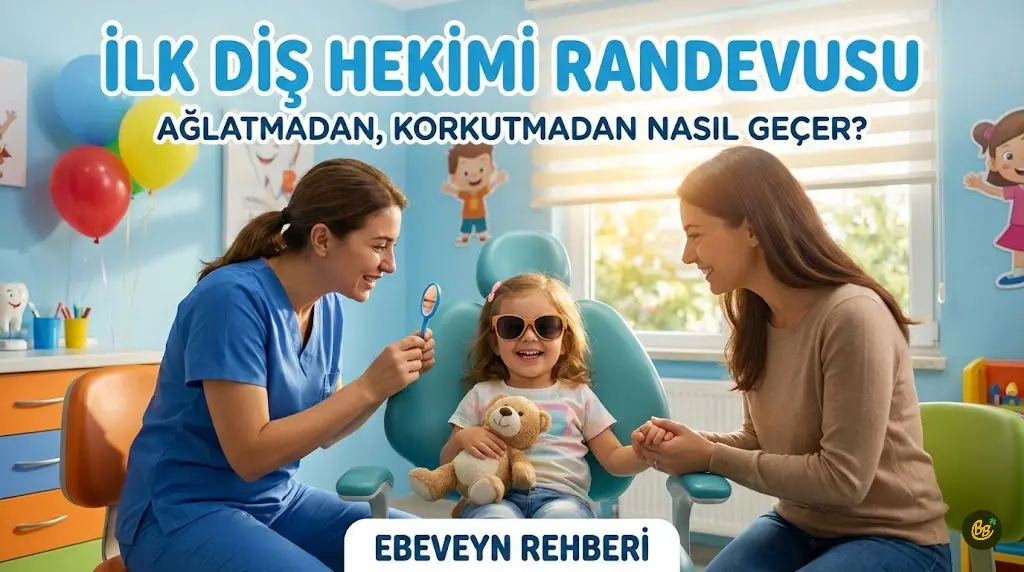
For many adults, the dentist’s chair can be unsettling; but what about for little hearts? Parents often wait for a “pain” or “cavity spot” to appear before taking their children to the dentist.
However, the golden rule in the world of Pedodontics (Pediatric Dentistry) is this: “A painful introduction creates trauma, while a pleasant check-up builds trust.”
Ensuring your child’s first encounter with the dentist feels like a game provides great convenience for future Primary Tooth Treatments. In this guide, you will find the ideal appointment timing, how to prepare at home, and Prof. Dr. Behiye Bolgül’s “fearless dentistry” approach.
Related Articles
- Primary Baby Tooth Treatments
- What is Early Childhood Caries (Baby Bottle Tooth Decay)?
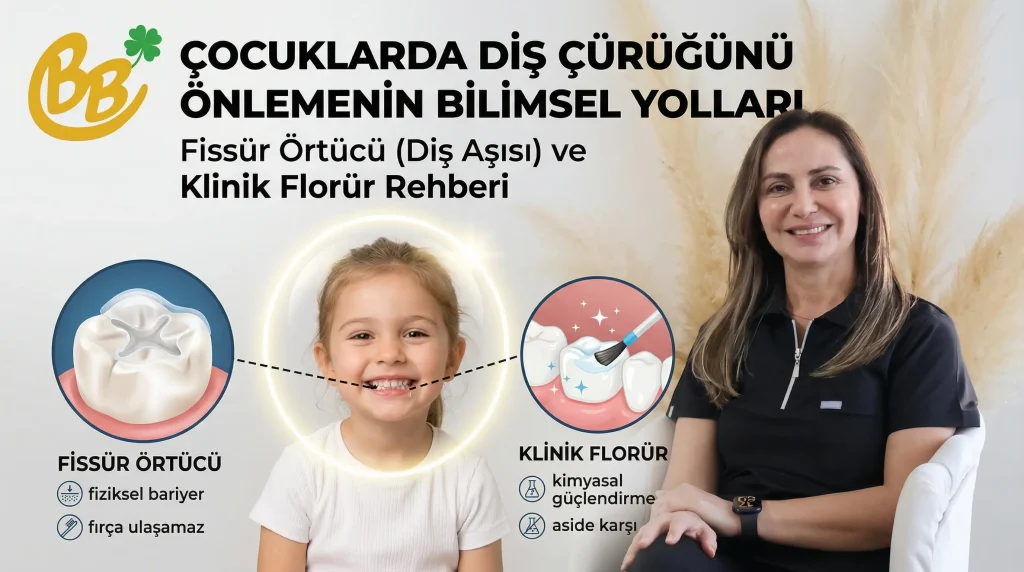
- Fissure Sealants in Children
- Fluoride Applications
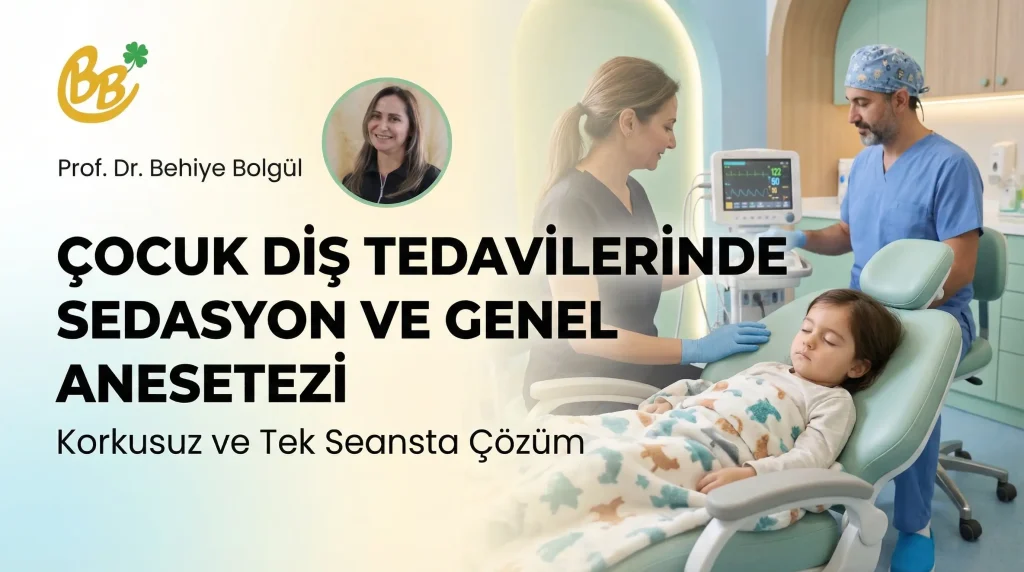
- Sedation and General Anesthesia
1. Don’t Say “It’s Too Early”: When is the Ideal Time?
The World Health Organization and pedodontic authorities give a clear date: The first dental examination should be done after the first primary tooth erupts (around the 6th month) or when the child turns 1 year old.
The reason for going this early is not treatment, but “prevention”. In check-ups at this age, risk factors answering the question What is Early Childhood Caries? are evaluated and parents are given nutritional education. Remember, if pain has started, it may be too late for a first introduction.
2. What is the “Tell – Show – Do” Technique?
We use special psychological techniques in the clinical setting to overcome children’s dental fear (Dentophobia). The most effective of these is the “Tell-Show-Do” method.
- Tell: The procedure is explained in a language the child understands. (e.g., “Now we will wash your teeth with this little shower head.”)
- Show: The instrument is first shown on the child’s hand or a toy.
- Do: The procedure is started after the child feels safe.
In this way, the child encounters no surprises and feels that they are in control.
3. Preparation at Home: What Parents Should Never Say
Your child’s success in the chair starts at home. Some sentences established with good intentions can create fear in the child’s subconscious.
- Wrong: “Don’t be afraid, it won’t hurt at all”, “They won’t give you a shot”. (The child only hears the words “hurt” and “shot” and gets suspicious.)
- Right: “We are going to count your teeth”, “They will apply special vitamins to your teeth.”
- Wrong: “If you are naughty, I will take you to the dentist and he will give you a shot!” (Never use the dentist as a punishment.)
- Right: After simple procedures like Fluoride Applications, verbally appreciate them for their courage.
4. Meeting Preventive Practices
First appointments usually do not include treatment, they include preventive dentistry. Fissure Sealants in Children, applied to the chewing surfaces of teeth to prevent cavities, ensure that the child loves the dentist as they are painless and needle-free procedures. This positive start ensures that the child will come running to the chair if a problem occurs in the future.
Comparison Table: Problem-Oriented vs. Control-Oriented Approach
How does when you take your child to the dentist affect their psychology?
| Situation | Going When Pain Starts (Late) | Going for Routine Check-up (Early) |
|---|---|---|
| Child’s Perception | “This is a place where I get hurt.” | “This is a playground where I have my teeth counted.” |
| Treatment Applied | Root canal treatment or extraction may be required. | Only Fluoride or cleaning is done. |
| Cost | Advanced treatments are more costly. | Preventive treatments are economical. |
| Future Impact | Dental phobia may develop. | Gains a lifelong regular dentist habit. |
Frequently Asked Questions
My child cries a lot and won’t sit in the chair, what should we do?
In some children, anxiety levels may be very high or they may be very young. In such cases, we evaluate Sedation and General Anesthesia options to ensure that all procedures are performed in a single session without the child remembering anything, to avoid creating trauma.
Is an X-ray taken at the first examination?
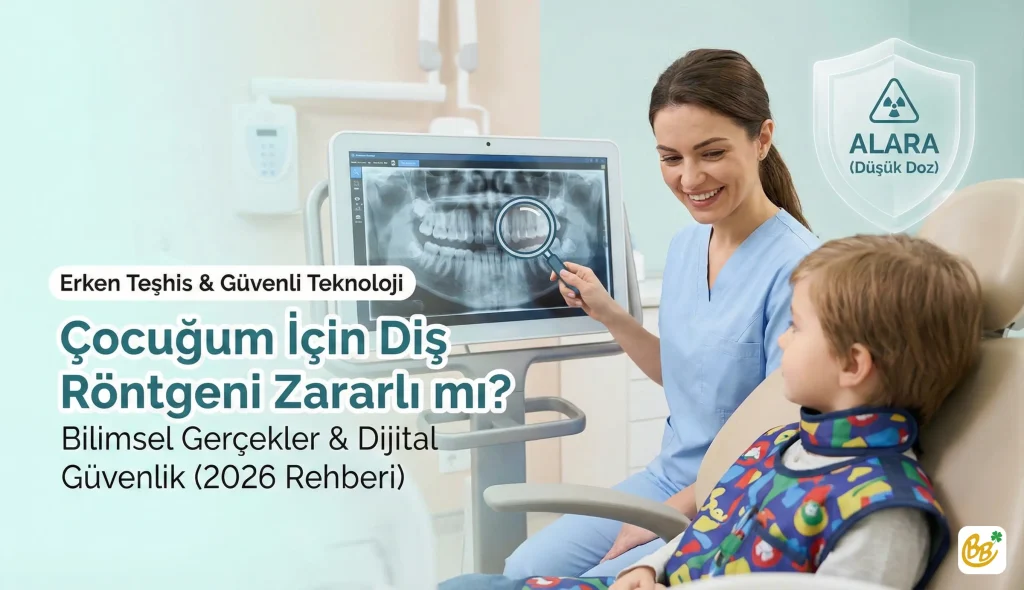
X-rays are not preferred in small children unless deemed necessary. However, if there is a suspicion of cavities or dental trauma has occurred, low-dose digital X-rays suitable for children can be used.
Can I come into the room with them?
Especially in the first meeting sessions, the presence of the mother or father in the room gives confidence to the child. However, in subsequent sessions, it may be suggested that the parent stays in the waiting room to strengthen the communication between the dentist and the child.
Start Smiling Without Delay!
If you do not want your child to develop dental phobia and wish them to have a healthy smile, take the first step correctly. A painless, needle-free, and fun-filled examination can change their whole life. Create your appointment now for a pleasant start under the guidance of Prof. Dr. Behiye Bolgül.