Every parent wants their child to have a healthy and happy smile. The primary teeth that form the foundation of this smile are important for the health of future permanent teeth. However, sometimes due to decay, trauma, or developmental defects, primary teeth can be severely damaged. This is where modern pedodontics (pediatric dentistry) offers both functional and aesthetic solutions with dental crowns for children.
So, does the idea of placing a crown on your child’s tooth worry you? If you’re wondering when this treatment is necessary, how it’s done, and what the right option is for your child, we are here to answer all your questions. In our clinic in Antalya, under the leadership of Prof. Dr. Behiye Bolgül, we protect little smiles with the most delicate and up-to-date methods.

Why Does My Child’s Tooth Need a Crown?
The decision to place a crown on a child’s tooth is usually made when the tooth is too damaged to be saved with a simple filling. A crown is one of the most durable methods, wrapping the tooth 360 degrees like a hat or helmet, protecting it from external factors and restoring its structural integrity. Pediatric Dentists recommend crown treatment in the following situations:
- Extensive Tooth Decay: If decay has affected a large portion of the tooth, a standard filling cannot provide enough strength to support the tooth. Fillings placed in teeth with such extensive loss cannot withstand the intense forces of chewing and begin to break in a short time. A crown completely encases the tooth, distributing these forces across the entire tooth, thus preventing it from breaking and ensuring much longer-lasting results.
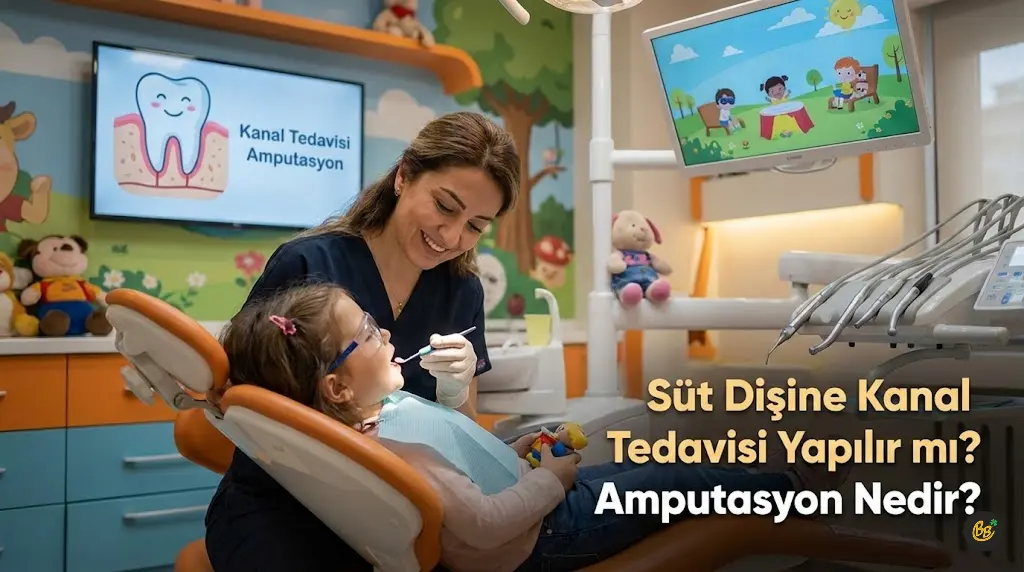
- Teeth That Have Undergone Root Canal Treatment: After root canal treatment on primary teeth, the teeth become more brittle. A crown is of critical importance to extend the life of the treated tooth and ensure it can fully perform its chewing function.
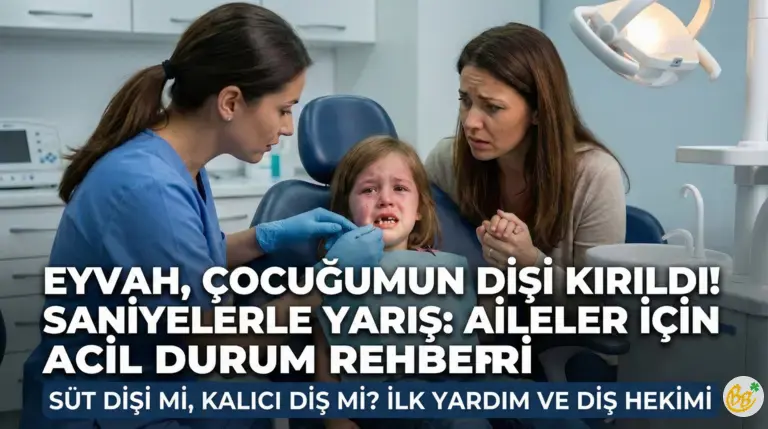
- Broken or Traumatized Teeth: It is a common occurrence for children’s teeth to break as a result of falling while playing or participating in sports. If the fracture covers a large part of the tooth, the remaining tooth structure cannot provide enough support for a filling. In this case, a crown is the most ideal and durable option to restore both the aesthetic appearance and the chewing function of the tooth.
- Developmental Defects: In some children, the tooth enamel may have a weaker or rougher structure due to genetic and developmental reasons. These teeth are weaker than normal, chalky, rough, and extremely prone to decay. They wear down and break very easily. To protect these specific teeth from external factors, prevent wear, and ensure they maintain their function, they need to be covered with crowns. Crowns act as a shield, protecting these sensitive teeth against external factors.
- “Baby Bottle Tooth Decay” (Early Childhood Caries – ECC): This type of decay, which often occurs due to the habit of consuming sugary liquids (milk, fruit juice, etc.) from a bottle, especially at night, usually starts to spread on the upper front incisors. The loss of tooth structure in these teeth is so extensive that placing a filling becomes technically impossible. Special crowns for front teeth are used to provide aesthetics and maintain the function of the teeth.
- Serious Aesthetic Concerns: Discoloration and shape deformities, especially in the front teeth, can negatively affect a child’s social life and self-confidence. A natural and beautiful smile can be achieved with aesthetic crowns.
Which Dental Crowns Are Used in Children?
Thanks to technological advancements, there are biocompatible and safe crown options specially designed for children. The dental crowns applied by Antalya pediatric dentist Prof. Dr. Behiye Bolgül can vary according to their materials. Each material can be chosen based on the child’s age, the location of the tooth, and their health status.
Stainless Steel Crowns (Metal Crowns)
Steel crowns are a durable type of crown frequently used on primary teeth. They are extremely long-lasting and durable. They can be easily applied in a single appointment. They are especially preferred for posterior molars. They allow the tooth to perform its chewing function perfectly. Due to their metallic silver color, they are not aesthetically preferred for front teeth.
Zirconia Ceramic Crowns (White Crowns)
This is the most popular option for situations where aesthetics are a priority. Zirconia is a durable and aesthetically natural material. It is extremely aesthetic, perfectly matching the natural tooth color. They do not contain metal and their biocompatibility is very high, meaning they have excellent harmony with the gums. They yield wonderful results, especially on front teeth.
Composite Crowns
These are generally used for aesthetic restorations on front teeth. They can be applied in a single appointment using tooth-colored composite filling material. The composite material provides a result that is closer to the natural appearance of the tooth. It yields aesthetically satisfying results. It is a less invasive method and is generally used after decay treatment.
How Is Dental Crown Treatment Performed in Children?
Our priority is to ensure your child feels safe and comfortable during the treatment process. Therefore, we proceed by explaining the entire process to you and our little patients in a language you can understand. The crown treatment process can be a source of anxiety for many parents. However, modern pediatric dentistry approaches aim to make this process as comfortable, fast, and trauma-free as possible for both the child and the family. Knowing the steps of the process will reduce fear and uncertainty.
First Step: Examination and Planning: Everything begins with a comprehensive examination by the pediatric dentist. The dentist examines the child’s oral and dental health in detail. The condition and extent of the decay are evaluated. If deemed necessary, X-rays are taken to clearly see the depth of the decay and the condition of the tooth roots. Based on the findings, a joint treatment plan is created with the parent, discussing whether the tooth can be treated with a crown and which type of crown is suitable.
Tooth Preparation and Anesthesia: To ensure your child feels nothing, the area to be treated is numbed with local anesthesia. The decayed tissue on the tooth is completely removed. The tooth is carefully shaped so that the crown will fit perfectly.
Crown Selection and Application: The appropriately sized and typed prefabricated crown is selected for the tooth. Stainless steel and zirconia crowns usually come in prefabricated sizes and are applied in a single session.
Cementation and Final Checks: Once the most suitable crown is found and made fully compatible with the tooth, it is fixed to the tooth with special biocompatible adhesives (very strong cements). The crown is placed firmly on the tooth. Excess cement is cleaned away, and the procedure is complete. Thanks to this system, the entire process usually ends in a single appointment.
What Are the Benefits of Dental Crowns in Children?
Effective Chewing and Nutrition: Children cannot chew comfortably with painful, structurally damaged, decayed, or broken teeth. They cannot grind food sufficiently, and this can directly affect their overall development. A crown perfectly mimics the original form and strength of the tooth, fully restoring your child’s chewing function. This allows them to consume food comfortably and ensures their healthy development.
Proper Speech Development: The front teeth, in particular, are important for the correct pronunciation of many sounds like “s,” “f,” “t,” and “v.” The early loss of these teeth can negatively affect a child’s speech development. Crown treatment helps your child’s speech to be fluent and clear by restoring the teeth.
Aesthetic Appearance: Decayed, broken, or discolored teeth, especially in the front area, can negatively affect a child’s self-confidence. It can cause them to hesitate to smile and experience difficulties in their social relationships. Dental crowns make the child’s teeth look natural. It is one of the most valuable investments you can make in their social and psychological development.
Protection of the Tooth: Large fillings placed in weakened teeth cannot withstand the intense pressure during chewing and tend to break in a short time. The biggest advantage of a crown is that it wraps the tooth 360 degrees like a helmet, distributing incoming forces evenly across the entire tooth. This prevents the tooth from breaking and keeps it safe in the mouth until its natural time to fall out. It helps the treated tooth stay healthy for a longer time.
Less Need for Future Treatment: Since the crown completely covers the tooth and is sealed tightly, it virtually eliminates the possibility of the tooth decaying again. Because no surface of the tooth is in contact with external factors, bacteria and food debris are prevented from seeping underneath the tooth. Crowns permanently restore the tooth, which can reduce the need for future treatments.
In conclusion, contrary to popular belief, dental crowns in children are not a treatment to be feared or worried about, but rather a modern, safe, and highly effective method developed to save severely damaged primary teeth and to protect your child’s chewing function, proper speech, and social self-confidence. With early diagnosis and correct treatment, problems can be easily solved. If you are looking for an expert approach to pediatric dental health in Antalya, we invite you to our clinic to meet Prof. Dr. Behiye Bolgül and her experienced team. We are here to answer all your questions about your child’s oral and dental health and to create the most suitable, modern treatment plan for them. A healthy smile is the most beautiful gift you can give your child.